
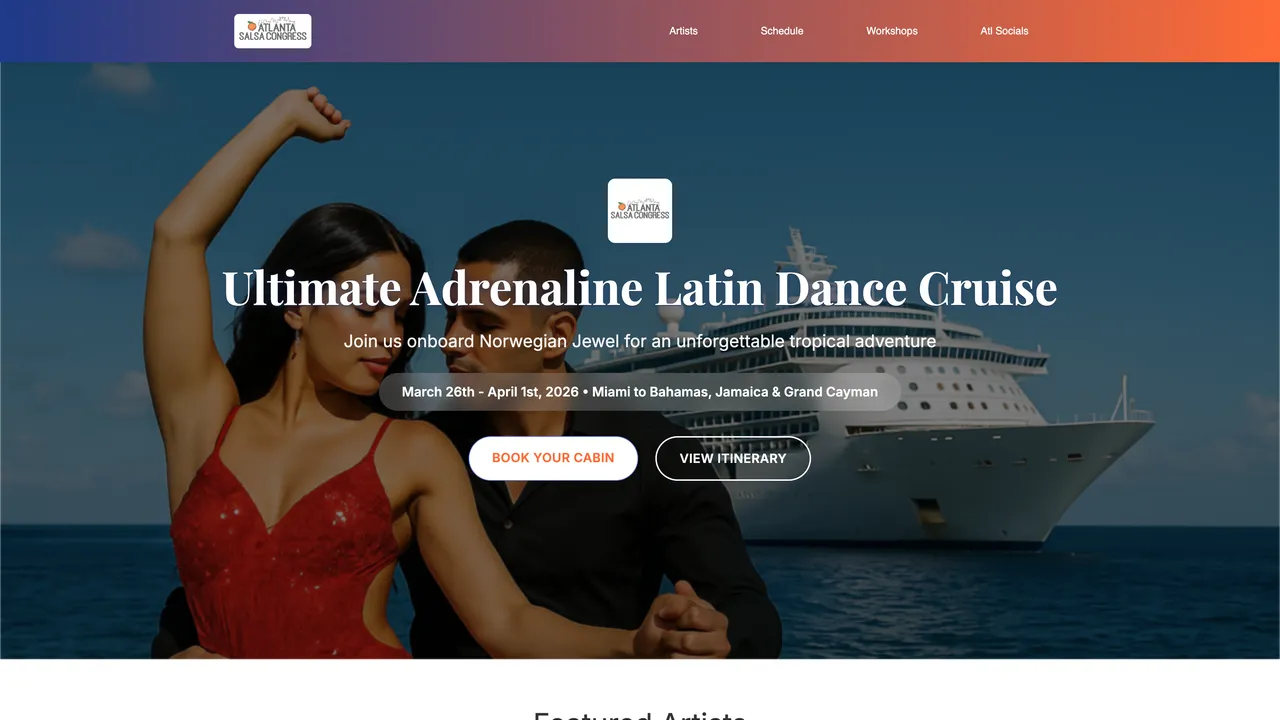
An event website we rebuild every single year
The Atlanta Salsa Congress is a recurring Latin-dance event, and its website isn't a build-once-and-forget project. The lineup, the schedule, and the branding change every year, so TiltStack redesigns and re-launches the site for each edition. We've managed it for three years running, and the 2026 edition was the biggest change yet: the event moved from a hotel congress to a seven-day dance cruise, which meant rebuilding the site from the ground up.
At a glance
- Industry: Live events / Latin dance
- Engagement: Annual design, build, and re-launch (3 years and counting)
- Stack: Static Next.js site, with an embedded Google Doc for the live workshop schedule
- The 2026 twist: A complete redesign when the event changed format from a hotel congress to a Caribbean dance cruise
The challenge: a website that reinvents itself
Most sites are built once and edited occasionally. An annual event is different: each year brings a new lineup, a new schedule, new artwork, and a hard deadline. On top of that, event details shift right up to the last minute, especially the workshop schedule. The site has to be fast and professional, cheap to run during the long off-season, and easy to change the day before the event without a developer on standby.
What we built
- A fast static site on Next.js. The whole site is statically generated, so it loads quickly, is secure, and costs almost nothing to host between events - there's no database or server to babysit during the eleven months the event isn't happening.
- A schedule the organizer can change at the last minute. The workshop schedule is an embedded Google Doc the organizer already controls. They edit the Doc, and the site reflects it instantly, with no code change and no redeploy. It's a deliberate design choice: hand last-minute control to a non-technical organizer while the rest of the site stays static and fast.
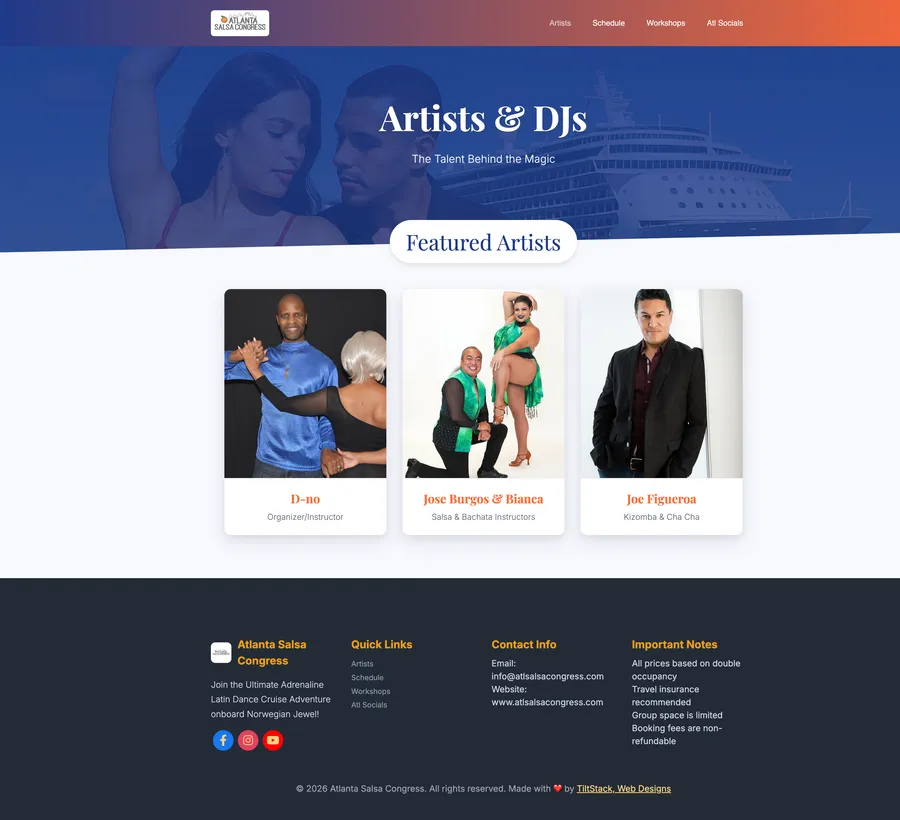
- The pages an attendee needs. Home, artists and DJs, schedule, workshops, and Atlanta socials, structured so the content can be swapped out cleanly each year.
- A structure built for reinvention. Because we rebuild it annually, the site is organized so the lineup, schedule, and theme can be replaced each cycle rather than reconstructed.
The 2026 rebuild: from ballroom to cruise ship
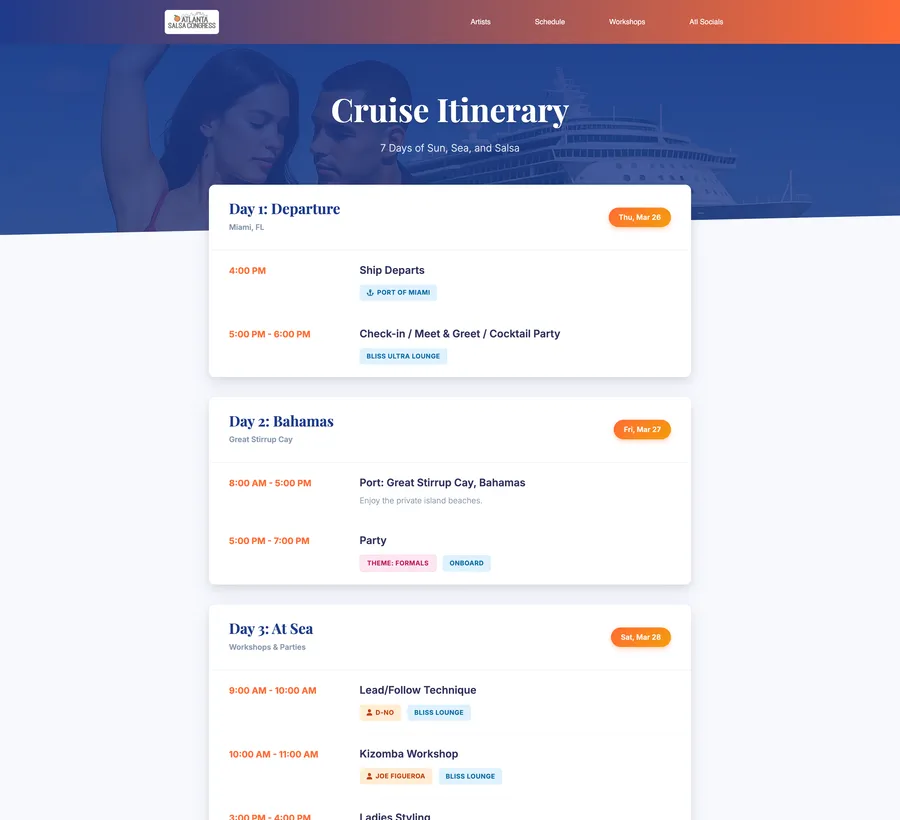
For its first years the event was a hotel congress with a large lineup of 20-plus artists and DJs, and each annual refresh was mostly a matter of updating the artwork and roster. The 2026 edition changed everything: the congress became the "Ultimate Adrenaline Latin Dance Cruise," a seven-day sailing on the Norwegian Jewel from Miami through the Bahamas, Jamaica, and Grand Cayman, with a tight headline lineup of three instructors. A cruise is a different product than a ballroom weekend, so the site needed a different information model - itinerary and destinations, cabin and booking details, and onboard logistics - not just a new coat of paint. We rebuilt it to fit.
The result
Three years in, the Atlanta Salsa Congress has a site that is fast, inexpensive to run, and refreshed on schedule every year, and that absorbed a complete change of format without missing a beat. It's a clear example of what ongoing event-site management looks like: not a one-time build, but a site that evolves with the event, year after year.
Frequently asked questions
How do you build a website for a recurring annual event?
You design it to be re-launched. The lineup, schedule, branding, and sometimes the whole format change every year, so the site is structured so those pieces swap out each cycle instead of being rebuilt from scratch.
How do you handle last-minute schedule changes on an event website?
For volatile content like a workshop schedule, we embed a document the organizer already controls (a Google Doc). They edit it and the site updates instantly, with no code change and no redeploy - last-minute control without a developer on call.
Should an event website be static or dynamic?
For most events, static wins: fast, secure, and almost free to host between events, with nothing to maintain in the off-season. Where content truly needs to change on the fly, integrate a source the organizer controls rather than building a full dynamic backend.
Do you manage event websites year over year?
Yes. We build them and then refresh them each cycle with the new lineup, schedule, and theme, and rework them when the event itself changes - as we did when this one became a cruise.
Running an event and need a site that keeps up?
Whether it's a one-time festival or an annual congress, we build fast event sites that are easy to update when plans change. Tell us about your event and we'll map it out.
Get a Free Consultation to Transform Your Business
Contact us today and let's discuss your project and goals.
Get Your Free Consultation